
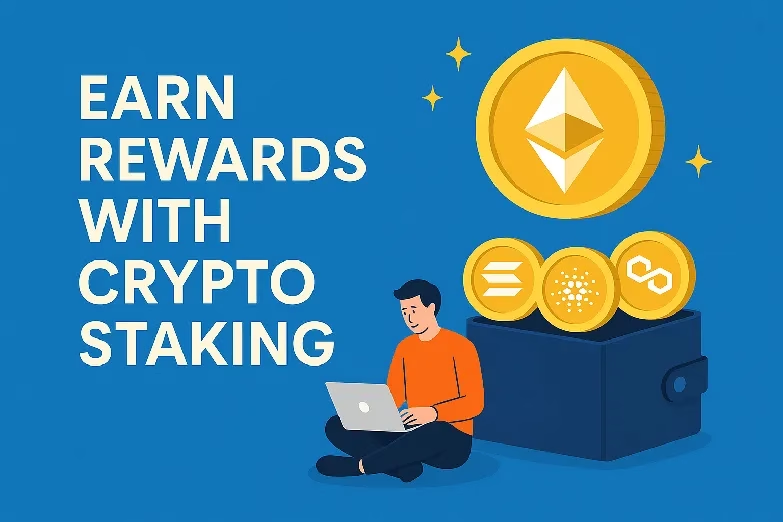

What is Crypto Staking?
Explaining Staking the Easy Way
Imagine your curious uncle at a family gathering asking, “Beta, what is this crypto staking you keep talking about?” You’d probably keep it simple: it’s the process of locking up your coins so a blockchain can run smoothly, and in return, you earn rewards.
That’s really it. With crypto staking, you don’t have to sit in front of glowing screens or trade every five minutes. You just commit your coins to a blockchain that uses Proof-of-Stake, and the system thanks you by giving you more coins. It feels like your money is quietly multiplying without stress.
Why Do Blockchains Need Staking?
Blockchains are like digital highways. Transactions are the vehicles, and they need rules and checkpoints to keep traffic safe. In older systems like Bitcoin, this job was done by miners who used energy-hungry machines.
In 2025, many networks have shifted to Proof-of-Stake. Here, instead of burning electricity, people stake coins to show they’re trustworthy. The more you stake, the more the network trusts you to validate transactions. This makes crypto staking not only eco-friendly but also efficient.
By staking your crypto, you’re basically saying, “I believe in this network so much, I’m putting my coins on the line.” That trust strengthens the system, keeps it decentralized, and ensures transactions remain secure. And of course, you’re rewarded for this loyalty with extra tokens.
Staking vs Mining
A lot of beginners compare staking to mining. The two sound similar because both help secure blockchains, but the approach is completely different.
- Mining requires solving puzzles, setting up expensive hardware, and paying sky-high electricity bills.
- Crypto staking requires only a wallet or an app. Lock your coins, and let the blockchain do the heavy lifting.
Mining feels like running a factory—noisy, expensive, and stressful. Staking feels like renting out a quiet apartment—you just sit back while the rent comes in. Both produce rewards, but staking is clearly the more beginner-friendly path in 2025.
The Rewards of Crypto Staking
The heart of crypto staking is the reward system. When you stake coins like Ethereum, Cardano, or Solana, you earn more of the same coin over time. It’s like earning interest, but instead of dusty old banknotes, you get digital assets with real market value.
Rewards vary depending on the coin and the platform. Some coins offer 4–5% annually, while others may give 10% or more. The beauty is that your earnings are predictable and steady. Unlike trading, you don’t need luck or perfect timing—you just need patience.
How the Process Works
To keep it super clear, let’s break down the steps of crypto staking:
- Choose a staking-supported coin like ETH, ADA, or DOT.
- Pick your platform—an exchange, a mobile wallet, or a decentralized protocol.
- Lock your coins, usually for a fixed period.
- Watch as the blockchain uses your stake to validate transactions.
- Receive regular rewards automatically in your wallet.
The whole process is designed to be as simple as possible. In fact, in 2025, even mobile apps make staking a one-click experience. No complicated coding, no massive setup—just easy passive earning.
Why Beginners Should Care
If you’re new to the crypto world, the chaos of trading can feel overwhelming. Charts move up and down like rollercoasters, and emotions run wild. Staking, on the other hand, offers peace of mind.
With crypto staking, you can start small, even with just a few dollars. You don’t need to be a tech expert or a millionaire. Anyone can join, earn, and learn about crypto in a low-risk way. This is why staking has become the go-to entry point for beginners in 2025.
It also teaches patience. Instead of chasing overnight profits, staking shows you the power of long-term holding. Your rewards may not make you rich instantly, but they grow steadily, month by month.
The Bigger Picture
On a larger scale, crypto staking is more than just a way to earn. It represents a shift in how blockchain networks operate. By moving away from mining, staking has made crypto greener, faster, and more democratic.
In older mining systems, only those with deep pockets could afford powerful machines. With staking, anyone can participate—even the small investor with a smartphone. That inclusivity is what makes staking such a powerful trend in 2025.
Staking in Everyday Language
Think of it like this:
- Mining is like sweating at the gym every day to stay fit.
- Staking is like eating healthy food and letting your body naturally stay in shape.
Both achieve results, but one is clearly less stressful. That’s why people are calling crypto staking the smarter way to participate in the blockchain economy.
And unlike mining, where electricity costs can eat away your profits, staking only requires your commitment. Your phone doesn’t buzz all night, your room doesn’t sound like an airport runway, and your wallet steadily grows.
Why It’s Perfect for 2025
The timing for crypto staking couldn’t be better. With adoption increasing and regulations becoming clearer, people want safe, stable, and eco-friendly ways to earn. Staking delivers exactly that.
It’s no longer just a side option for tech geeks—it has become mainstream. Exchanges promote it, wallets highlight it, and communities discuss it. The message is clear: staking is here to stay, and it’s only getting bigger.
For beginners, it’s the easiest way to step into the world of decentralized finance without getting lost in the noise. It combines simplicity, rewards, and a sense of participation in something bigger than yourself.
So when your uncle asks again what staking is, you can smile and say: “It’s like letting my crypto do the hard work while I relax. And it pays me for it.”
How Does Staking Work? (Step-by-Step Without the Geek Talk)
The Beginner-Friendly Path
So, you’re ready to dive into crypto staking but don’t want to feel like you’re cutting the wrong wire in a spy movie? Relax. Staking in 2025 has become smoother, simpler, and friendlier than ever before. With a few taps, your digital assets can start earning while you carry on with life. No complicated jargon, no tech headaches—just clear steps anyone can follow.
Step 1: Choose a PoS-Supported Coin
Not every coin in your wallet is fit for crypto staking. Only Proof-of-Stake coins qualify. Think of them as the “FD-approved” coins of the blockchain world. Popular names include Ethereum (ETH), Cardano (ADA), Solana (SOL), Polygon (MATIC), and Cosmos (ATOM).
These coins aren’t just random picks—they power some of the largest blockchain ecosystems in 2025. By staking them, you’re not only earning but also helping maintain networks that millions rely on every day. It’s like choosing snacks—some give you energy, others just empty calories. Stick to the nutritious ones.
Step 2: Pick a Platform (Exchange or Wallet)
Now that you have your coin, the next decision is where to stake it. This is where beginners usually hesitate, but it’s simpler than you think.
- Centralized exchanges like Binance, Coinbase, or Kraken are perfect for those who want a one-click solution. You deposit, stake, and wait. These platforms handle all the technical validator stuff behind the scenes.
- Non-custodial wallets like Trust Wallet, Ledger Live, or Keplr offer more control. You get to pick validators directly, which can sometimes lead to slightly higher rewards. It’s like choosing between a buffet and home-cooked meals—both fill you, but one gives you more control over ingredients.
In either case, your coins stay under your ownership. The only difference is who manages the actual staking process.
Step 3: Lock Coins and Choose a Validator
Here’s where the real action begins. Once you’ve selected your platform, you’ll lock your coins for staking. Think of this like placing your money in a digital locker. It’s still yours, but you’ve committed it to the blockchain so the system can run smoothly.
If you’re staking through an exchange, this step is automatic. But if you’re using a wallet, you’ll need to choose a validator. Validators are like the guardians of the network—keeping it secure and confirming transactions. In return, they share rewards with you.
The golden rule here: pick a validator with good uptime and reputation. Don’t go for one that goes offline as often as your Wi-Fi during a thunderstorm. A reliable validator means smoother staking and steady rewards.
Step 4: Sit Back and Earn Rewards
This is the part that makes crypto staking so appealing. Once your coins are staked, there’s nothing left to do but wait. Rewards start rolling in automatically. Depending on the coin, returns can range between 4–12% annually.
It may sound slow, but think of it like planting a money tree. At first, it just sits there. Over time, it starts bearing fruit, and the longer you let it grow, the more it gives back. Unlike trading, there’s no emotional rollercoaster—just quiet, predictable growth.
And because staking rewards are paid in the same coin you staked, your holdings can snowball into something much larger over time.
Bonus Tip: Enable Auto-Compounding
Some platforms now offer auto-compounding—a feature that restakes your rewards automatically. This means your profits earn profits, creating what many call the “magic money snowball effect.”
Instead of pulling out your calculator and manually restaking every week, the system does it for you. Over time, auto-compounding makes a big difference. It’s like interest on interest, but in the digital world of crypto staking.
Why This Process Works So Well in 2025
The beauty of crypto staking in 2025 lies in its simplicity. What once required setting up a validator node, keeping servers online, and knowing command-line tools is now just a few clicks away. Platforms are designed to make the process painless, so even complete beginners can stake without fear.
More importantly, the variety of staking options has expanded. You can choose centralized exchanges for convenience or decentralized wallets for control. You can stake long-term for higher returns or flexible terms for liquidity. This flexibility makes staking accessible to everyone, whether you’re a student, a part-time investor, or a seasoned HODLer.
The Human Side of Staking
Beyond the numbers and percentages, there’s something deeply satisfying about staking. It feels like your crypto is finally pulling its weight. Instead of sitting idle in your wallet, it’s out there working, securing networks, and multiplying quietly.
For many, crypto staking is the first step toward understanding decentralized finance. It teaches patience, responsibility, and trust in blockchain technology. And unlike trading, it doesn’t demand your attention every hour. You can sip tea, binge your favorite series, or scroll memes while your crypto grows in the background.
A Simple Reminder
While crypto staking feels effortless, remember that it isn’t risk-free. Coins can fluctuate in value, platforms may change rules, and validators can sometimes underperform. But with careful choices and trusted platforms, these risks are manageable.
That’s why the step-by-step approach is so important. Each decision—coin, platform, validator—shapes your staking journey. Treat it with the same care you’d give to planting a real garden. The effort is small, but the harvest can be rich.
So next time you hear someone overcomplicate the process with tech jargon, you’ll know better. Staking isn’t rocket science—it’s more like setting up an online savings account, but with extra flavor. Your crypto locks in, the network does the heavy lifting, and you enjoy the steady rewards.
Best Coins to Stake in 2025 (And Why They’re Like VIPs of Passive Income)
Picking the Right Stars for Your Portfolio
When it comes to crypto staking, not all coins play the same role. Some are like rockstars, pulling massive crowds with high returns. Others behave more like steady nine-to-five workers—reliable, predictable, and always on time. And of course, a few are still figuring out their rhythm in the staking world.
In 2025, staking has matured, and the best coins stand out as true VIPs of passive income. These coins don’t just give rewards—they provide stability, community trust, and long-term potential. Let’s take a tour of the top performers you can count on this year.
Ethereum (ETH) – The Responsible Elder
Ethereum is the OG of smart contracts. After years of mining, it finally embraced Proof-of-Stake like a grown-up. Today, ETH is one of the most trusted coins for crypto staking.
On average, staking Ethereum earns you 4–5% annually. That may not sound jaw-dropping, but considering ETH’s dominance in decentralized finance, it’s rock-solid. Depending on where you stake, lock-up periods can vary—from a single day on exchanges to a few days on the Ethereum mainnet.
What makes ETH attractive is its reputation. It powers thousands of dApps, NFTs, and DeFi platforms. So, when you stake ETH, you’re not just earning—you’re securing the backbone of modern blockchain.
Solana (SOL) – The Comeback Kid
Solana is fast, efficient, and resilient. It has faced downtime issues in the past, but each time, it bounced back stronger. By 2025, Solana has cemented its place as one of the hottest coins in crypto staking.
Rewards range between 6–8% annually, making SOL a great pick for those who like balance between risk and return. Most platforms don’t require long lock-ups—sometimes just a couple of days. That flexibility attracts many investors who want liquidity while still earning.
The speed of Solana’s blockchain and its popularity among developers keep the ecosystem buzzing. Staking SOL feels like betting on a young athlete with endless energy—occasionally tripping, but always getting back up.
Cardano (ADA) – The Steady Philosopher
If Ethereum is the elder and Solana the athlete, Cardano is the philosopher. It moves at its own pace, guided by research and careful upgrades. That same steady nature makes ADA one of the most beginner-friendly coins for crypto staking.
Annual rewards hover around 3–5%. Not flashy, but reliable. And the best part? No lock-up period. You can unstake anytime you like, giving you unmatched flexibility. For people who don’t like commitments, ADA is a dream come true.
Staking ADA is like eating grandma’s home-cooked meal—comforting, consistent, and always nourishing. It may not be glamorous, but it’s deeply satisfying over the long run.
Cosmos (ATOM) – The Juicy Reward Machine
Cosmos is often called the “Internet of Blockchains.” It focuses on connecting different blockchains into one big ecosystem. For this reason, crypto staking on ATOM is both rewarding and impactful.
The APY can go as high as 10–12% if you choose the right validator. That’s one of the highest among major coins. However, it comes with a catch: a 21-day lock-up period. That means once you stake, your coins are stuck for three weeks before you can move them again.
For investors who don’t mind patience, ATOM feels like a jackpot. It’s like planting fruit trees—you wait a bit longer, but the harvest is worth it.
Polygon (MATIC) – The Cashback King
Polygon, the helper-chain of Ethereum, has become a vital piece of the crypto puzzle. Its fast and low-cost transactions make it a favorite for developers, and its staking system adds another layer of appeal.
Rewards usually range between 5–7% annually. Not only that, staking options are flexible depending on the platform. For many, staking MATIC feels like getting cashback on crypto transactions—steady perks while still enjoying the ecosystem.
In the world of crypto staking, MATIC combines utility and profit. It’s not just about returns—it’s about supporting a network that makes Ethereum more efficient.
Honorable Mentions
Not every coin can grab the spotlight, but some deserve recognition for their staking potential:
- Avalanche (AVAX): Offers about 7% APY but requires a higher minimum staking amount, making it better for bigger holders.
- Tezos (XTZ): Easy entry, with around 5% rewards, and simple staking mechanics.
- Near Protocol (NEAR): Fast-growing and innovative, with APY ranging between 9–11%. It’s the rising star worth watching closely.
These coins might not be the absolute top picks, but they add variety and options for those looking to diversify their staking portfolio.
Making the Right Choice
So, which one should you pick? It depends on your style. If you want safety and trust, Ethereum is your go-to. If you want energy and growth, Solana fits the bill. If flexibility matters, Cardano wins. If you love high rewards, Cosmos delivers. And if you want a balance of utility and returns, Polygon is the way to go.
Each of these coins brings something unique to the table, and that’s the beauty of crypto staking in 2025. There’s no single “best” option—only the best for your goals.
Staking Like a Slow Dance
At the end of the day, staking isn’t a sprint. It’s a slow dance with rewards. Each coin has its rhythm—some fast, some steady, some demanding patience. As long as you know what you want, you can let your crypto glide along and earn without stress.
That’s what makes these coins the VIPs of passive income. They turn holding into earning, and they do it with style.
Where to Stake Your Crypto Without Losing Sleep (or Coins)
Finding the Right Staking Spot
Choosing where to stake can feel like choosing where to park your car overnight. You want it safe, reliable, and easy to access when you need it. The good news is that in 2025, the options for crypto staking are better than ever. Platforms are more secure, interfaces are beginner-friendly, and you don’t need to worry about waking up to find your coins gone.
Still, not every staking spot is equal. Some prioritize safety, others maximize rewards, and a few give you flexibility. Knowing the difference can save you both stress and money.
Centralized Exchanges – The One-Click Option
For beginners, centralized exchanges are often the easiest way to enter crypto staking. Platforms like Binance, Coinbase, and Kraken make the process feel as simple as topping up your Netflix account. Deposit coins, click stake, and your rewards start building automatically.
The biggest advantage is convenience. You don’t need to understand validators, network fees, or technical setups. The exchange handles everything for you. Many even let you unstake quickly, so your coins aren’t locked forever.
But there’s a catch. When you stake through an exchange, you trust them with custody of your assets. It’s like leaving your car with valet parking. Most of the time, it’s fine—but it’s not the same as holding the keys yourself.
Non-Custodial Wallets – Control in Your Hands
If you prefer keeping full control, non-custodial wallets are the way to go. With apps like Trust Wallet, Keplr, or Ledger Live, you hold your private keys, and no one else can touch your coins. For many investors, this makes crypto staking feel safer.
The process is straightforward. You pick a validator, delegate your coins, and start earning rewards. The returns are often slightly higher than on exchanges because you cut out the middleman.
Of course, with control comes responsibility. You need to research validators, check their uptime, and avoid ones with bad reputations. Picking the wrong validator can reduce your rewards—or in rare cases, cause small penalties. Still, for those who value independence, wallets are a solid option.
Staking Pools – Teamwork Pays Off
Not everyone has enough coins to run their own validator. That’s where staking pools come in. Think of them as community gardens for crypto staking. Everyone contributes a little, and together they earn rewards, which are then shared proportionally.
Pools make staking accessible for smaller investors. You don’t need 32 ETH to participate—you can join with just a fraction. Plus, pools are usually run by experienced operators, so you benefit from professional management without the technical burden.
The key is choosing a reputable pool. Look for transparency, low commission fees, and active community engagement. A strong pool means steady earnings with fewer headaches.
DeFi Platforms – The Wild but Rewarding Side
Decentralized finance platforms add a layer of excitement to crypto staking. Apps like Lido, Rocket Pool, or Marinade Finance allow liquid staking. This means you can stake your coins and still use them elsewhere in DeFi. It’s like eating your cake and having it too.
When you stake through DeFi, you often receive a token representing your staked assets. You can trade it, lend it, or use it in yield farming. This unlocks more opportunities for passive income.
However, DeFi comes with higher risks. Smart contract bugs, hacking attempts, and sudden market shifts can all affect your funds. It’s the adventurous option—rewarding but not for the faint-hearted. Beginners should start small before diving in deep.
Custodial vs Non-Custodial – The Big Choice
One of the main decisions in crypto staking is whether to go custodial or non-custodial.
- Custodial staking (via exchanges) means giving up some control for maximum convenience.
- Non-custodial staking (via wallets or DeFi) means you hold the keys but take on more responsibility.
Neither option is universally better. It depends on your comfort level. If you value ease of use, custodial may fit. If you prioritize independence and security, non-custodial makes more sense.
Safety First – How to Sleep Well While Staking
The goal of crypto staking is passive income, not sleepless nights. To keep things safe, follow some golden rules:
- Only stake on trusted platforms with strong reputations.
- Research validators before delegating.
- Don’t put all your coins in one place—spread them across platforms.
- Keep your wallet recovery phrases safe and offline.
- Start small, then scale up once you’re comfortable.
With these basics covered, staking becomes stress-free. You’ll know your coins are working for you without unnecessary risks.
Matching Platforms to Your Style
Everyone approaches crypto staking differently. Some want maximum safety, others chase high rewards, and many look for flexibility. The key is matching the platform to your personality.
- If you want simplicity, go for centralized exchanges.
- If you want control, pick non-custodial wallets.
- If you want collaboration, try staking pools.
- If you want innovation, explore DeFi liquid staking.
There’s no wrong answer, only the one that makes you comfortable. The beauty of staking in 2025 is that you have choices tailored to your needs.
The Peaceful Side of Staking
In the end, crypto staking should feel peaceful. You’re letting your assets earn for you, not creating new stress in your life. Whether you choose exchanges, wallets, pools, or DeFi apps, the goal remains the same—steady rewards, safe growth, and minimal hassle.
It’s like finding the right mattress for good sleep. Once you pick the right staking platform, you won’t toss and turn. Your crypto works silently in the background, and you rest easy knowing it’s growing without extra effort.
Expected Returns in 2025: Show Me the Crypto!
Why Returns Matter More Than Ever
Everyone loves the idea of crypto staking because it sounds like free money. But in 2025, expectations are a little more grounded. Investors don’t just want promises—they want numbers they can actually believe in. Returns vary depending on the coin, platform, and lock-up terms, but one thing is clear: staking remains one of the easiest ways to let your crypto work for you.
When you understand expected returns, you know how much you can realistically make. It’s not about guessing or following hype. It’s about knowing what your staked coins can bring back while you keep them safe.
Ethereum (ETH) – The Solid Performer
Ethereum has finally matured into a stable PoS giant, and its returns reflect that. For most users, crypto staking with ETH brings around 4–5% annually. It’s not the highest, but it’s consistent, trusted, and backed by the biggest smart contract network.
The beauty of staking ETH lies in flexibility. On some platforms, you can stake and unstake within a day. On others, it takes longer. Either way, Ethereum gives you peace of mind—low risk, steady growth, and a network that keeps delivering.
For beginners, ETH is the safe friend who always shows up on time. You won’t get fireworks, but you’ll get reliability.
Solana (SOL) – The High-Energy Player
Solana continues to impress in 2025 with speed and performance. When it comes to crypto staking, SOL offers around 6–8% APY. That’s a sweet spot—better than ETH but still relatively safe compared to riskier coins.
The best part? No major lock-ups. You can usually unstake in just a couple of days. That flexibility makes Solana attractive for people who like liquidity. Of course, Solana has had its downtime issues, but it has also shown resilience, bouncing back stronger every time.
Think of SOL as the athlete in the crypto world—sometimes flashy, but with stamina and rewards worth betting on.
Cardano (ADA) – The Gentle Giant
Cardano’s approach to crypto staking is calm and steady. In 2025, ADA holders earn around 3–5% annually. It won’t make headlines, but it’s stable and beginner-friendly. You don’t need to lock your coins for months, which gives you freedom.
ADA appeals to long-term thinkers. It’s built on research, careful upgrades, and a focus on sustainability. For those who don’t want stress, ADA staking is like putting money in a reliable savings account—low drama, steady interest, and peace of mind.
It’s not the flashiest choice, but sometimes boring is exactly what you need.
Cosmos (ATOM) – The Big Reward Seeker
Cosmos remains one of the most generous options for crypto staking. With expected returns of 10–12% APY, ATOM stands out in 2025. The catch? A 21-day lock-up period. That means once you stake, your funds are frozen for three weeks if you want to unstake.
The trade-off is simple: patience brings bigger rewards. Cosmos has built its reputation on connecting blockchains, and its staking system reflects its ambition. High yields attract those willing to commit, while smaller investors test it cautiously with partial stakes.
If you’re looking for higher rewards without diving into risky altcoins, Cosmos is the go-to option.
Polygon (MATIC) – The Utility Hero
Polygon isn’t just about cheap transactions anymore—it’s a staking favorite. In 2025, crypto staking with MATIC gives you 5–7% APY. It’s moderate but reliable, especially since Polygon remains a critical scaling solution for Ethereum.
MATIC’s staking system is flexible, with different platforms offering varied terms. You can stake for days or months, depending on your style. Plus, MATIC’s strong role in the dApp ecosystem adds extra confidence to staking.
It’s the middle ground—better returns than ADA, less lock-in than ATOM, and more utility than most.
Other Notables Worth Watching
While the big five dominate, other coins also shine in crypto staking this year. Avalanche (AVAX) offers around 7%, but you need a larger minimum stake. Tezos (XTZ) delivers a simple 5%, perfect for beginners. Near Protocol (NEAR) comes in strong with 9–11%, appealing to those ready to try rising projects.
Each of these has its pros and cons. They might not be as famous as ETH or SOL, but they add diversity to your staking portfolio. Spreading your coins across different projects can balance safety with stronger returns.
Balancing Risk and Reward
Expected returns in crypto staking always come with trade-offs. High rewards often mean longer lock-ups or higher risks. Lower rewards usually bring safety and liquidity. The smart move is to balance them.
For example, you could stake some ETH for steady reliability, add SOL for moderate returns, and keep a portion in ATOM for high rewards. This way, your staking income feels both stable and exciting.
It’s not about chasing the biggest number. It’s about building a staking mix that fits your comfort zone.
Passive Income Without Stress
At the end of the day, crypto staking in 2025 remains one of the easiest forms of passive income. You don’t need mining rigs, you don’t need trading skills, and you don’t need to watch charts all day. Your coins earn while you hold.
Returns may not make you a millionaire overnight, but they compound over time. Small percentages add up, and with patience, staking becomes a long-term wealth-building tool.
Expected returns aren’t promises—they’re opportunities. And in 2025, those opportunities remain strong across major networks. All you need to do is pick your coins wisely, spread your stakes, and let your crypto grow while you live your life.
Risks & Downsides of Staking: Because Nothing’s Ever Totally Free
The Hidden Side of Easy Rewards
Everyone loves talking about passive income, but few dive into the shadows of crypto staking. Sure, it sounds like free money while your coins sit quietly, but nothing in finance is truly risk-free. In 2025, staking has matured, yet the risks remain as real as ever.
Understanding these downsides doesn’t mean you should avoid staking. It simply means you can walk in with open eyes instead of rose-colored glasses. Let’s explore what could go wrong.
Lock-Up Periods – Your Funds Aren’t Always Liquid
When you commit to crypto staking, your coins are locked for a set time. Depending on the network, this could range from a few hours to several weeks. During this period, you can’t sell, trade, or move them.
Imagine staking right before the market dips hard. You see prices falling, but your funds are trapped. That’s the double-edged sword—staking rewards you, but it also limits your flexibility. The longer the lock-up, the higher the risk of feeling stuck.
Liquidity matters more than most beginners realize. Always consider how long you’re comfortable being tied down before staking.
Slashing – When Validators Mess Up
In crypto staking, validators keep the blockchain running. But what if they fail? Networks like Ethereum or Cosmos have a rule called “slashing.” If your chosen validator behaves dishonestly or goes offline, a portion of your staked coins can be cut as punishment.
This means you lose money, even though you personally did nothing wrong. It’s like leaving your car with a valet who scratches it—you take the hit. Choosing a reliable validator isn’t just about better rewards; it’s about protecting your coins from slashing risks.
Not all platforms expose you to this, especially centralized exchanges. But in non-custodial wallets, validator choice makes all the difference.
Market Volatility – Rewards Don’t Cancel Price Drops
Here’s the catch: crypto staking may give you 5–10% APY, but if the coin itself drops 40%, your portfolio still bleeds. Rewards can soften the blow but not erase it.
This is why staking is often compared to planting a tree during storm season. The tree grows steadily, but if a hurricane hits, you still lose branches. Staking works best when you believe in the long-term value of the coin. If you’re shaky on the project, staking won’t save you from losses.
Centralized vs. Decentralized Platforms – Trust Issues
Many beginners prefer centralized exchanges for crypto staking because they’re simple and user-friendly. But this convenience comes with a trade-off—you’re trusting the platform with custody of your coins. If the exchange gets hacked, freezes withdrawals, or collapses, your funds are at risk.
On the flip side, decentralized wallets give you full control. But they demand responsibility, like choosing validators and managing private keys. Lose your keys, and your staked assets are gone forever. Both paths have risks—you just have to decide whether you’d rather trust yourself or a company.
Inflation and Reward Dilution
Networks often print new tokens to pay out crypto staking rewards. This means while you’re earning, more coins are flooding the market. The result? Inflation. Over time, your rewards may buy less than you expect.
For example, if a network offers 12% APY but also increases supply by 15% annually, your real gain is negative. It’s like getting a salary raise while everything at the store gets more expensive. Not all projects handle this well, so it’s crucial to research tokenomics before staking.
Technical Risks – Wallets, Smart Contracts, and Human Error
Staking sounds simple—click and earn. But under the hood, there’s tech that can break. Smart contract bugs, wallet glitches, or even user mistakes can cause losses. Send coins to the wrong staking address? They’re gone. Forget to update your wallet app? You could miss rewards.
In decentralized crypto staking, even small errors can be costly. Unlike banks, there’s no customer support hotline to reverse a mistake. This adds a layer of pressure for beginners who are still learning the ropes.
Opportunity Cost – The Money You Could Have Made Elsewhere
When you lock into crypto staking, you’re choosing one path for your funds. But what if another opportunity pops up? Maybe a new token launch, a trading rally, or a chance to flip NFTs. If your funds are tied in staking, you can’t pivot quickly.
This is called opportunity cost—the loss of potential gains because you chose another option. While staking feels safe, it sometimes means missing out on higher profits elsewhere.
Psychological Trap – Mistaking Staking for Guaranteed Income
One of the sneakiest downsides of crypto staking is the mindset it creates. Rewards feel like guaranteed income, but they’re not. Coins can lose value, validators can fail, or inflation can eat into gains.
Overconfidence in staking may lead people to overcommit, putting in more than they should. It’s important to treat staking as a tool, not a magic money machine. Discipline and balance keep you safe from disappointment.
Final Word of Caution
Crypto staking in 2025 is powerful, rewarding, and beginner-friendly. But like any financial strategy, it comes with risks. Lock-ups, slashing, volatility, platform trust, inflation, and human error are all part of the game.
None of these risks mean you should avoid staking altogether. They simply highlight the need for awareness. When you stake with open eyes, you can enjoy rewards while staying mindful of the pitfalls. That balance makes staking sustainable—and keeps your crypto journey stress-free.
Tips for Beginners: Stake Smart, Not Hard
Start Small, Learn the Ropes
If you’re new to crypto staking, the smartest move is to start with a small amount. Don’t throw your life savings into staking just because someone promised easy returns. Begin with coins you can afford to lock up without stress.
This way, you learn how the process works while keeping risk under control. Once you’re confident, you can scale up and stake larger amounts. Think of it as testing the waters before diving in.
Choose the Right Coin for Your Goals
Not every coin is worth staking. Some offer tiny returns, while others are high-risk with flashy numbers. As a beginner in crypto staking, stick to established names like Ethereum, Solana, or Cardano. These projects have proven track records and stable networks.
Before staking, ask yourself: do I believe in this coin long-term? If the answer is no, it’s probably not the right one to stake. Rewards only matter if the coin itself holds value.
Pick Trusted Platforms Only
Your choice of platform makes or breaks your crypto staking experience. Centralized exchanges are beginner-friendly, but they hold your coins. Decentralized wallets give you control, but they demand responsibility.
Whichever you choose, research its reputation. Look for security features, community reviews, and transparency about fees. A little homework now saves you from headaches later.
Understand Lock-Up Rules Before Committing
Many networks require you to lock coins for days or weeks. In crypto staking, this means you can’t access your funds instantly. Beginners often ignore this detail and panic when they can’t unstake during a price dip.
Always read the lock-up terms before hitting the “stake” button. Some coins like ADA allow flexible unstaking, while others like ATOM hold your funds for weeks. Knowing this helps you plan better.
Diversify Your Staking Portfolio
Putting all your coins into one basket is tempting, but risky. In crypto staking, diversification smooths out rewards and lowers the chance of major losses. Stake across multiple coins like ETH for safety, SOL for moderate gains, and ATOM for high rewards.
This way, if one project struggles, your entire staking income doesn’t collapse. Diversity is not just for traders—it works for stakers too.
Don’t Forget Validator Research
If you stake through a non-custodial wallet, you’ll need to pick a validator. In crypto staking, a bad validator can cost you rewards or even slash your funds. Beginners often overlook this step and stake blindly.
Always check validator uptime, commission rates, and community reputation. A reliable validator ensures your rewards stay safe and steady. Think of it like choosing a business partner—you want someone trustworthy.
Enable Auto-Compounding Where Possible
One of the easiest ways to maximize crypto staking is auto-compounding. This means your rewards are automatically restaked, creating a snowball effect. Over time, this leads to much bigger growth without extra effort.
Not every platform offers it, but when you find one that does, turn it on. It’s the closest thing to passive income magic in staking.
Keep an Eye on Fees
Staking rewards are nice, but fees can eat into them fast. In crypto staking, platforms may charge commission or withdrawal fees. Beginners often ignore these small percentages, but over a year, they add up.
Always compare platforms before staking. Sometimes a slightly lower APY with fewer fees ends up being more profitable than a flashy APY with hidden costs.
Stay Updated on Network Changes
Blockchains evolve, and staking rules change with them. As someone in crypto staking, you need to stay updated. Networks may adjust rewards, change lock-up terms, or introduce new features.
Following official announcements, communities, or newsletters keeps you informed. Knowledge helps you adapt quickly and avoid surprises.
Don’t Stake Money You Can’t Afford to Lose
This is the golden rule of crypto staking. Rewards feel easy, but crypto remains volatile. Always stake amounts that won’t affect your daily life if prices drop.
Treat staking as a tool for steady growth, not as a guaranteed paycheck. Beginners who overcommit often regret it when the market swings. Balance safety with ambition, and you’ll enjoy staking without unnecessary stress.
The Smart Beginner’s Edge
Beginners in crypto staking often underestimate the power of discipline. Smart staking is not about chasing the highest yield. It’s about steady choices, risk management, and patience.
By starting small, diversifying, researching validators, and enabling auto-compounding, you set yourself up for long-term success. Over time, these small steps grow into meaningful rewards.
Staking is simple, but smart staking is an art. And once you learn that, your crypto doesn’t just sit idle—it works for you while you live your life.
Frequently Asked Questions (FAQ) about Crypto Staking
1. What is crypto staking?
Crypto staking is the process of locking your coins into a Proof-of-Stake blockchain to support network security and operations. In return, you earn rewards—similar to earning interest in a savings account. Unlike mining, it doesn’t require expensive equipment or high electricity use. All it takes is holding your crypto in a wallet or exchange that supports staking. It’s a beginner-friendly way to grow your portfolio passively while helping blockchains run smoothly.
2. How does crypto staking generate rewards?
Rewards in crypto staking come from the blockchain itself. Validators confirm transactions and maintain the network, and in return, new tokens are distributed as rewards. When you stake, you’re essentially backing those validators. The more coins you stake, the greater your share of the rewards pool. Annual returns vary by network, typically ranging from 3% to 12%. It’s not “free money,” but a fair exchange for supporting the system’s stability and security.
3. Is crypto staking safe?
Crypto staking is generally safe, but it’s not risk-free. The main risks include market volatility, lock-up periods where you can’t access funds, and validator slashing if you’re using a wallet-based option. Centralized exchanges carry custodial risks too. The best way to stay safe is to stake only well-known coins, use trusted platforms, diversify your stakes, and never lock more than you can afford to lose. With the right precautions, staking is a reliable passive income method.
4. Which coins are best for staking in 2025?
Some of the top coins for crypto staking in 2025 include Ethereum (ETH), Solana (SOL), Cardano (ADA), Polygon (MATIC), and Cosmos (ATOM). Each offers different rewards and lock-up rules. ETH is reliable with 4–5% APY. SOL balances returns and liquidity at around 6–8%. ADA is flexible with no lock-ups. ATOM provides higher 10–12% rewards but requires patience. MATIC is utility-driven, offering 5–7%. Beginners should focus on established coins with active communities and strong fundamentals.
5. Can I lose money while staking?
Yes, crypto staking has risks where you could lose money. First, the coin’s price may fall, reducing the overall value of your holdings despite rewards. Second, if you stake through a validator that gets slashed for misconduct, you may lose part of your stake. Third, inflation can dilute returns if more tokens are constantly minted. These downsides don’t erase the benefits, but they highlight the need to stake responsibly and choose networks wisely.
6. What are staking lock-up periods?
In crypto staking, some coins require you to lock your tokens for a certain time, meaning you can’t withdraw or trade them. This can be as short as a day (Ethereum on some exchanges) or as long as 21 days (Cosmos). While your funds earn rewards, they remain inaccessible during this period. Lock-up terms vary by project and platform, so always read carefully before staking. Flexible coins like Cardano avoid this issue, offering instant access.
7. Is staking better than trading?
For many beginners, crypto staking is easier and less stressful than trading. Trading requires constant attention, chart analysis, and the stomach to handle volatility. Staking, on the other hand, offers predictable returns without day-to-day pressure. However, trading can generate faster profits if done well, while staking is slow and steady. The choice depends on your style: traders seek short-term wins, while stakers prefer long-term passive income with lower risks and less emotional involvement.
8. What’s the difference between staking on exchanges and wallets?
Staking on exchanges is user-friendly—you simply deposit your crypto, click “stake,” and let the platform handle everything. But with exchange-based crypto staking, the exchange holds custody of your funds, which adds counterparty risk. Wallet staking gives you full control and often higher rewards but requires choosing a validator yourself. Both have pros and cons. Beginners often start with exchanges for simplicity, while advanced users prefer wallets for independence and potentially greater returns.
9. How much can I earn from crypto staking in 2025?
Earnings from crypto staking in 2025 vary depending on the coin and platform. On average, expect between 4% and 12% APY. For example, staking Ethereum may earn around 4–5%, while Cosmos offers up to 12%. The size of your stake also matters—the more coins you lock, the higher your overall reward. While it’s not get-rich-quick money, compounding rewards over time can grow into meaningful passive income for patient, long-term investors.
10. What is validator slashing?
In crypto staking, slashing is a penalty for validators who act dishonestly or fail to keep their systems online. When this happens, a portion of the staked coins delegated to them is cut as punishment. That means you could lose money even if you didn’t personally misbehave. To avoid slashing risks, research validators before staking. Look for those with high uptime, good reputations, and low commission rates. A solid validator protects both your rewards and funds.
11. Can I unstake my crypto anytime?
It depends on the coin and platform. Some networks like Cardano allow instant unstaking, while others like Cosmos require waiting 21 days. With exchange-based crypto staking, rules vary—some offer flexible staking, while others require fixed lock-ins for higher rewards. Always check withdrawal terms before staking so you’re not caught off guard during a market dip. Flexibility is key for beginners who may want faster access to their funds in unexpected situations.
12. Do staking rewards get taxed?
In most countries, yes—crypto staking rewards are taxable. They’re usually treated as income when received, and later subject to capital gains tax if you sell the coins at a profit. Tax rules vary widely across regions, so it’s best to check your local regulations. Keeping records of your staking rewards makes tax filing easier. While taxes can feel like a buzzkill, planning ahead ensures you enjoy your staking gains without legal headaches.
13. Is crypto staking worth it in 2025?
For many, crypto staking is absolutely worth it in 2025. It provides passive income, helps secure blockchain networks, and avoids the stress of constant trading. Returns aren’t sky-high, but they’re steady, predictable, and better than leaving coins idle in a wallet. Risks exist, from volatility to slashing, but with research and smart choices, staking remains one of the most beginner-friendly ways to grow wealth in crypto. It’s a slow game that rewards patience.
Related Blogs
Staking vs Mining: Which Is the Better Way to Earn From Crypto Currency?
Top Crypto Staking Methods for Passive Income
Liquidity Mining and Staking — Which Yield Strategy Suits You?

What’s up, just wanted to say, I enjoyed this article.
It was helpful. Keep on posting!
https://online-dice-ru.com