
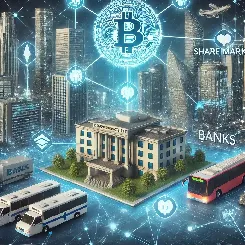

(From Inception to Future Prospects)
The world of finance—and technology as a whole—underwent a silent revolution in 2009 when a mysterious entity known as Satoshi Nakamoto introduced Bitcoin to the world. What started as a niche experiment among cryptography enthusiasts soon grew into a global phenomenon, sparking debates, attracting investors, and inspiring an entirely new technological ecosystem—blockchain.
Today, cryptocurrencies and blockchain technology are no longer confined to the fringes of the internet. They are reshaping how we perceive money, ownership, and even trust. From enabling peer-to-peer digital payments to powering smart contracts, decentralized finance (DeFi), and NFTs, this technology has moved far beyond its initial financial playground.
But how did we get here, and more importantly, where are we headed? Let’s take a deep dive into the fascinating journey of cryptocurrency and blockchain—right from their inception to the limitless possibilities they hold for the future.
The Birth of a Digital Revolution
The financial crisis of 2008 exposed deep cracks in the global banking system. Trust in centralized authorities was shaken, and people were yearning for an alternative—a transparent, decentralized system free from government or corporate control.
Enter Bitcoin. It wasn’t just another payment system; it was a bold statement against financial centralization. By combining cryptography, peer-to-peer networking, and an immutable public ledger, Bitcoin laid the foundation for what we now call cryptocurrency. Early adopters viewed it as “digital gold,” a store of value immune to inflation and political manipulation.
While many dismissed it as a passing fad or even a tool for cybercrime, Bitcoin continued to gain traction. Soon, it sparked curiosity among developers and innovators who saw a much bigger potential: blockchain technology itself.
Beyond Bitcoin: The Rise of Blockchain as a Technology
While Bitcoin was the first application, the real hero of the story was the underlying blockchain—a decentralized, tamper-proof ledger system. Innovators realized that blockchain could do much more than just record financial transactions.
With the launch of Ethereum in 2015, the game changed completely. Ethereum introduced smart contracts—self-executing agreements that run automatically when predefined conditions are met. This opened the doors for:
- Decentralized Finance (DeFi) platforms that allow lending, borrowing, and earning interest without banks.
- NFTs (Non-Fungible Tokens) that enable digital ownership of art, music, and collectibles.
- Decentralized applications (dApps) in gaming, supply chain management, healthcare, and even voting systems.
Suddenly, blockchain was not just about money; it was about creating a trustless digital economy where middlemen could be replaced by code.
A Technology Expanding Beyond Finance
One of the most exciting aspects of blockchain is its potential beyond the world of cryptocurrency. Governments are exploring Central Bank Digital Currencies (CBDCs), businesses are experimenting with blockchain-based supply chain tracking, and healthcare providers are testing secure patient data management systems.
From tracking the origin of your morning coffee beans to verifying the authenticity of luxury goods, blockchain is quietly becoming a backbone of transparency and trust in various industries.
Why the Future Holds Even Bigger Possibilities
We are still in the early chapters of this story. Emerging technologies like Artificial Intelligence (AI), Internet of Things (IoT), and Web3 are now integrating with blockchain, promising a future where machines, devices, and humans interact in a secure and decentralized way.
Will cryptocurrencies replace traditional banks? Will governments fully embrace decentralized models or regulate them heavily? While no one has definite answers, one thing is certain—the cryptocurrency and blockchain era is here to stay, and its best days are yet to come.
The Early Days: The Birth of Cryptocurrency and Blockchain
The story of cryptocurrency begins like something straight out of a techno-thriller—a mysterious figure, a groundbreaking idea, and a world desperate for financial change. Long before crypto became a buzzword for investors, it was simply a vision shared in a whitepaper posted on a small online forum. That vision? To create a form of money that belonged to no bank, no government, and no single authority—only to the people who used it.
The Mysterious Satoshi Nakamoto
In October 2008, amid the chaos of a global financial meltdown, an unknown individual—or perhaps a group—using the pseudonym Satoshi Nakamoto published a paper titled “Bitcoin: A Peer-to-Peer Electronic Cash System.” The timing was significant. People had lost faith in banks and governments, who were accused of mishandling the economy and bailing out big corporations while ordinary citizens suffered.
Satoshi proposed an alternative: a digital currency that operated entirely outside the traditional financial system. No banks, no middlemen, no government oversight—just pure peer-to-peer transactions powered by cryptography. The idea wasn’t entirely new; digital currencies had been attempted before, but they all failed because they couldn’t solve one crucial problem: trust.
Solving the “Double-Spending” Problem
Traditional digital money could be easily copied, making it prone to what’s called the double-spending problem—a situation where someone spends the same digital coin twice. Banks solve this by acting as trusted intermediaries, keeping a central ledger to verify transactions.
Satoshi’s genius was in eliminating this need for trust by introducing a blockchain—a decentralized, transparent ledger maintained by a network of computers (called nodes). Every transaction was recorded in blocks, which were linked in chronological order, forming an immutable chain. Once a block was added, it couldn’t be altered without consensus from the entire network, making fraud practically impossible.
This innovation was revolutionary. For the first time in history, people could exchange value digitally without needing to trust a central authority.
The Genesis Block and the First Bitcoin Transaction
On January 3, 2009, the very first block of the Bitcoin blockchain—known as the Genesis Block—was mined by Satoshi himself. Embedded within this block was a hidden message:
“The Times 03/Jan/2009 Chancellor on brink of second bailout for banks”
This was more than just a timestamp; it was a subtle protest against the traditional banking system, highlighting why Bitcoin was created in the first place.
The Early Skepticism and Enthusiasts
In its infancy, Bitcoin attracted mainly cryptographers, tech enthusiasts, and libertarians who believed in financial freedom. Many mainstream economists dismissed it as a passing fad or, worse, an instrument for illegal activities. But the small community of early adopters kept experimenting, mining coins on regular laptops and exchanging them for fun rather than profit.
The most famous early Bitcoin purchase was in May 2010, when programmer Laszlo Hanyecz paid 10,000 BTC for two pizzas. At the time, those coins were worth about $40; today, that transaction is worth hundreds of millions of dollars—a story that has since become legendary in crypto history.
The Blockchain: The True Game-Changer
While Bitcoin was designed primarily as digital money, innovators soon realized that the real treasure was the blockchain technology itself. The concept of a distributed, tamper-proof ledger could be applied far beyond digital currency—something that would later spark the birth of Ethereum, DeFi, and NFTs. But in these early days, no one fully grasped the magnitude of what had been unleashed.
A Silent Revolution Begins
Looking back, the birth of Bitcoin and blockchain was more than just the creation of a new currency—it was the beginning of a global financial revolution. What started as a niche experiment slowly laid the foundation for an entirely new digital economy, one that promised transparency, security, and financial independence for all.
And this was only the beginning.
Key Milestones in Blockchain and Cryptocurrency Improvement
The journey of cryptocurrency and blockchain has been nothing short of extraordinary—a story of innovation, experimentation, booms, busts, and relentless evolution. From a simple idea of decentralized digital cash, blockchain has grown into a multi-trillion-dollar industry influencing finance, technology, art, and even governance. Let’s walk through some of the most significant milestones that shaped this digital revolution.
2009: Bitcoin Goes Live – The Dawn of Decentralized Currency
The year 2009 was historic. Satoshi Nakamoto mined the first-ever block of the Bitcoin blockchain, known as the Genesis Block, officially launching the first real-world use of cryptocurrency. Bitcoin introduced the world to the idea of decentralized money, operating without banks or intermediaries.
At this stage, Bitcoin was worth almost nothing, and only a handful of enthusiasts mined it using their personal computers. But this quiet beginning laid the foundation for the massive crypto industry we see today.
2011: Birth of Rival Cryptocurrencies
By 2011, Bitcoin’s success inspired other developers to experiment with new versions of cryptocurrency. Two notable names emerged:
- Litecoin (LTC): Created by Charlie Lee, Litecoin was designed to be a “lighter” version of Bitcoin, offering faster transaction times and lower fees.
- Namecoin (NMC): One of the earliest attempts to use blockchain beyond money, Namecoin aimed to create a decentralized domain name system to make the internet more censorship-resistant.
These early experiments showed that blockchain’s potential went far beyond digital payments.
2013–2015: The Ethereum Revolution and Smart Contracts
The next major leap came with the launch of Ethereum in 2015, conceptualized by Vitalik Buterin in 2013. Unlike Bitcoin, which focused solely on being a digital currency, Ethereum introduced the world to smart contracts—self-executing agreements coded directly onto the blockchain.
This single innovation changed everything. Developers could now build decentralized applications (dApps) on the Ethereum network, paving the way for:
- Decentralized Finance (DeFi)
- NFTs (Non-Fungible Tokens)
- Blockchain-based gaming and supply chain solutions
Ethereum turned blockchain from a financial experiment into a programmable platform for global innovation.
2016–2018: ICO Boom and Blockchain Expansion
Between 2016 and 2018, blockchain technology saw explosive growth, driven largely by the Initial Coin Offering (ICO) boom. Startups worldwide began issuing their own tokens to raise funds, promising new blockchain-based solutions.
While many projects turned out to be scams or failed experiments, this period attracted billions of dollars in investment and significantly expanded public awareness of cryptocurrency.
The downside? Regulatory authorities started cracking down on fraudulent projects, signaling the beginning of stricter oversight in the crypto space.
2019–2020: The Rise of Stablecoins and Institutional Interest
As the crypto market matured, stablecoins like Tether (USDT) and USD Coin (USDC) gained popularity, offering the benefits of cryptocurrency without wild price volatility.
More importantly, institutional investors started paying attention. Companies like Grayscale and MicroStrategy began adding Bitcoin to their portfolios, and payment platforms such as PayPal started allowing crypto transactions. Blockchain was no longer just for tech geeks—it was entering mainstream finance.
2021: NFTs and DeFi Take the Spotlight
The year 2021 was all about NFTs (Non-Fungible Tokens) and Decentralized Finance (DeFi). Digital art sales like Beeple’s $69 million NFT auction made headlines worldwide. Meanwhile, DeFi protocols offered new ways to lend, borrow, and earn interest without traditional banks.
Bitcoin and Ethereum also reached all-time highs, fueling massive global interest and drawing millions of new investors into the crypto market.
2022: Crypto Winter and Regulatory Scrutiny
After the euphoric highs of 2021, 2022 brought a harsh reality check. Market crashes, high-profile project failures (like Terra Luna), and the collapse of major exchanges (such as FTX) triggered what became known as the “crypto winter.”
Governments around the world tightened regulations, pushing for stricter compliance and consumer protection. However, this period also filtered out many fraudulent projects, leaving behind stronger, more legitimate players.
2023: Recovery and the Rise of Web3
In 2023, the industry slowly recovered, shifting focus toward Web3, the vision of a decentralized internet powered by blockchain. Projects emphasized real-world utility rather than speculation, with applications in gaming, healthcare, and supply chain transparency gaining traction.
2024: Institutional Adoption and CBDCs Gain Momentum
By 2024, institutional adoption surged. Global financial giants explored tokenized assets, and several countries launched or tested Central Bank Digital Currencies (CBDCs), signaling a merging of traditional finance with blockchain.
2025: The Present – Towards a Fully Decentralized Future
As of 2025, blockchain and cryptocurrency are no longer fringe technologies. They are influencing banking, governance, education, healthcare, and entertainment. Discussions around AI-blockchain integration, sustainable crypto mining, and interoperable blockchains are shaping the next chapter.
What started as a simple experiment in digital money has now evolved into a global movement redefining trust, ownership, and the very fabric of the internet.
Blockchain’s Impact on Finance and Global Trading
The financial world has always been plagued by inefficiencies—slow cross-border payments, expensive intermediary fees, and outdated verification systems. Blockchain technology, however, is rewriting these old rules, making global finance faster, cheaper, and far more transparent. From instant cross-border transactions to decentralized lending platforms and even stock market innovation, blockchain is transforming how money and assets move around the world.
Let’s explore these revolutionary changes in detail.
Revolutionizing Cross-Border Payments
The Problem with Traditional Transactions
Sending money across borders through traditional banking systems can feel like sending a letter by mail in the age of instant messaging. Transactions often take three to five business days, involve multiple intermediaries (banks, clearinghouses, and SWIFT networks), and charge high service fees.
Blockchain’s Solution: Instant and Low-Cost Transfers
Blockchain networks like Ripple (XRP) and Stellar (XLM) are solving this issue by enabling near-instant cross-border payments at a fraction of the cost.
- Ripple (XRP): Designed for banks and financial institutions, Ripple’s network settles international transactions in just a few seconds, replacing the outdated SWIFT system.
- Stellar (XLM): Focused on financial inclusion, Stellar allows fast and affordable transactions, making it easier for unbanked populations to receive international remittances.
This shift isn’t just convenient—it’s life-changing for migrant workers and businesses that rely on real-time international payments.
Fraud Prevention and Enhanced Security
The Immutable Ledger Advantage
One of blockchain’s strongest features is its immutability—once data is recorded on a blockchain, it cannot be altered or deleted. This drastically reduces the risk of fraud and unauthorized modifications in financial records.
For banks, this means:
- Reduced chargeback frauds in digital transactions.
- Transparent audits, as all transactions are permanently recorded.
- Stronger security against hacking attempts due to blockchain’s distributed nature.
Essentially, blockchain acts as a tamper-proof vault for financial data, giving customers and institutions greater confidence in digital transactions.
Identity Verification and KYC (Know Your Customer)
The Redundancy Problem
Currently, every bank or financial institution verifies a customer’s identity separately, leading to repetitive KYC (Know Your Customer) checks. This process is costly, time-consuming, and frustrating for customers.
Blockchain-Powered Digital Identity
Blockchain allows the creation of secure digital identities, where customers can store verified credentials on a decentralized network. Once verified, the same data can be shared with multiple institutions without repeating the entire KYC process.
Benefits include:
- Faster onboarding of customers.
- Lower compliance costs for banks.
- Better privacy, as users control who accesses their data.
Countries like India and Singapore are already experimenting with blockchain-based KYC systems to improve financial inclusion and streamline regulatory compliance.
Lending and Credit Scoring
Breaking the Monopoly of Credit Bureaus
Traditional lending relies heavily on centralized credit bureaus, which often exclude people with limited banking history.
Decentralized Lending Platforms
Blockchain-based lending platforms use smart contracts to connect borrowers and lenders directly, removing the need for intermediaries.
For example:
- Borrowers can use crypto assets as collateral to secure loans instantly.
- Credit scoring can be based on on-chain transaction history, opening lending opportunities for people outside traditional banking systems.
This system democratizes access to credit, particularly in developing countries where many people remain unbanked.
Central Bank Digital Currencies (CBDCs)
Governments Embracing Blockchain
As cryptocurrencies gained popularity, governments worldwide started exploring Central Bank Digital Currencies (CBDCs)—blockchain-powered versions of their fiat currencies.
Benefits of CBDCs include:
- Improved monetary policy control, as central banks can track money flow in real time.
- Faster and cheaper government payouts, such as subsidies or welfare benefits.
- Better financial inclusion, especially in rural or remote areas where traditional banking is limited.
Countries like China (Digital Yuan) and India (Digital Rupee) are leading the CBDC race, signaling a future where blockchain may become a standard part of national financial systems.
Blockchain in Stock Markets and Trading
Blockchain isn’t just transforming payments and banking—it’s also rewriting the rules of stock trading. By improving transparency, speeding up settlements, and enabling fractional ownership, blockchain is making financial markets more efficient and accessible.
Tokenized Assets and Fractional Ownership
The Concept of Tokenization
Blockchain enables the tokenization of real-world assets, such as stocks, real estate, or even luxury collectibles. Each token represents a fractional share of the underlying asset, allowing:
- Small investors to buy fractions of expensive assets, such as real estate or blue-chip stocks.
- Increased liquidity, as tokenized assets can be traded 24/7 on blockchain-based exchanges.
Imagine buying 0.001% of a New York skyscraper or a fraction of Tesla stock—blockchain makes that possible.
Faster Settlements
Traditional stock trades usually take T+2 or T+3 days (trade date plus 2–3 days) to settle due to multiple intermediaries like clearinghouses and custodians.
Blockchain, however, enables near-instant settlement by recording and verifying trades on a decentralized ledger, reducing settlement time to minutes instead of days. This not only improves market efficiency but also reduces counterparty risk.
Transparency and Reduced Market Manipulation
Since all transactions on a blockchain are recorded on a publicly verifiable ledger, market manipulation becomes significantly harder. Every trade can be traced, creating an environment of enhanced investor trust and reducing insider trading risks.
Automated Smart Contracts
Smart contracts are reshaping stock trading by:
- Automatically executing trades when predefined conditions are met.
- Eliminating human errors and delays caused by manual processing.
This automation ensures that trades are faster, cheaper, and error-free.
Decentralized Exchanges (DEXs)
Decentralized Exchanges (DEXs) are emerging as alternatives to traditional stock exchanges. They allow peer-to-peer trading of tokenized stocks and other assets without intermediaries, making trading more accessible, transparent, and cost-effective for retail investors.
The Bigger Picture
Blockchain is no longer just a buzzword—it is reshaping the financial world at every level, from cross-border payments to stock market trading. By eliminating unnecessary middlemen, enhancing security, and opening doors to new investment opportunities, blockchain is driving us toward a future where finance is faster, fairer, and more inclusive.
Impact of Cryptocurrency and Blockchain Beyond Finance
When most people think of blockchain and cryptocurrency, their minds immediately jump to Bitcoin, trading charts, and digital wallets. But this technology is so much bigger than just money. Blockchain is quietly reshaping industries far beyond finance—healthcare, education, supply chains, and even governance are feeling the ripple effect.
The beauty of blockchain lies in its transparency, security, and decentralization. And these qualities make it perfect for solving long-standing problems in sectors that have nothing to do with buying or selling crypto.
Let’s explore how blockchain is making a real-world impact—sometimes in ways you might never have imagined.
Blockchain in Healthcare: Securing Patient Data and Enhancing Trust
Medical Records That Can’t Be Tampered With
One of healthcare’s biggest headaches is managing sensitive patient data. Traditional medical record systems are often fragmented, prone to errors, and vulnerable to hacking.
Enter blockchain. With its immutable (unchangeable) ledger, blockchain can store patient records securely while allowing authorized doctors or hospitals to access them instantly.
Imagine this:
- You move to another country, but your entire medical history—scans, prescriptions, allergies—is just a click away on a blockchain-powered system.
- No duplicate tests, no lost files, and no unauthorized data manipulation.
Companies like Medicalchain and BurstIQ are already working on decentralized healthcare data systems, paving the way for safer and more efficient medical care.
Tracking Pharmaceuticals to Prevent Counterfeit Drugs
The World Health Organization (WHO) estimates that 10% of medicines in developing countries are counterfeit. Blockchain’s transparent supply chain can track every step of a drug’s journey—from manufacturer to pharmacy shelf—ensuring that patients receive authentic medicines.
Blockchain in Education: Fighting Fake Degrees and Empowering Lifelong Learning
Tamper-Proof Academic Credentials
Fake degrees and forged certificates are a growing problem in education and recruitment. Blockchain offers a solution by issuing verifiable digital diplomas that employers can check instantly.
For example:
- MIT’s Digital Diploma project uses blockchain to provide students with verifiable, tamper-proof certificates.
- Instead of calling universities for background checks, employers can confirm qualifications with just one click.
Decentralized Learning Platforms
Blockchain also supports decentralized education platforms, where students can pay for courses, earn verifiable skill badges, and even transfer credits across institutions.
Imagine a global education marketplace where your learning history is stored securely on the blockchain and recognized worldwide—no more piles of transcripts or paperwork.
Blockchain in Supply Chain: Transparency from Factory to Customer
End-to-End Tracking for Authenticity
Ever wondered if the “organic coffee” you buy is genuinely organic? Or whether your diamond ring is conflict-free?
Blockchain solves this by providing end-to-end product tracking. Every step—from raw material sourcing to final delivery—is recorded on an unchangeable ledger.
- IBM’s Food Trust uses blockchain to track food items, helping companies like Walmart trace contaminated products within seconds.
- De Beers uses blockchain to ensure that diamonds are ethically sourced, giving customers peace of mind.
Faster and More Efficient Logistics
Blockchain reduces paperwork and middlemen in logistics, speeding up shipments and cutting costs. In industries like automotive and fashion, blockchain is becoming a game-changer for inventory management and quality control.
Blockchain in Governance: Towards Transparent and Trustworthy Systems
Fighting Corruption with Transparent Records
Government corruption thrives in opaque systems where records can be manipulated. Blockchain’s transparent and tamper-proof nature can make public spending, land registry, and taxation more accountable.
- Estonia, a global leader in digital governance, uses blockchain to secure healthcare, judicial, and legislative data.
- India and Georgia have tested blockchain-based land registries to prevent property fraud.
Voting Systems That Can’t Be Rigged
Election fraud is a worldwide concern. Blockchain-powered voting systems can ensure secure and transparent elections by recording every vote on an immutable ledger.
Imagine voting from your phone, knowing your vote is counted instantly and cannot be altered. Pilot projects in South Korea, the U.S., and Switzerland are already testing blockchain-based voting systems.
Blockchain in Real Estate: Simplifying Ownership Transfers
Property transactions are notorious for complicated paperwork, long waiting times, and fraud risks. Blockchain can revolutionize real estate by:
- Tokenizing properties, allowing fractional ownership and easier investment.
- Recording property titles on blockchain, making ownership transfers faster and fraud-proof.
Countries like Sweden have tested blockchain for real estate transactions, significantly reducing processing times.
Blockchain in Energy and Sustainability: Peer-to-Peer Energy Trading
The future of energy could be decentralized and green, thanks to blockchain.
- Peer-to-peer energy trading: Homeowners with solar panels can sell excess energy directly to neighbors via blockchain-based platforms.
- Tracking carbon credits: Companies can use blockchain to track and trade carbon credits transparently, helping meet environmental goals.
Projects like Power Ledger (Australia) are already making peer-to-peer renewable energy trading a reality.
The Bigger Picture: A Technology for Social Good
What makes blockchain exciting isn’t just its use in finance—it’s the potential to solve real-world problems across industries. From authenticating medicines to making education more accessible and ensuring honest governance, blockchain is slowly becoming the backbone of a more transparent and efficient world.
However, it’s important to remember that these are early days. Widespread adoption will require overcoming challenges such as scalability, regulatory approval, and public awareness. But as more governments, businesses, and innovators experiment with blockchain, the possibilities seem endless.
The Future of Blockchain and Cryptocurrency
Blockchain technology and cryptocurrencies have already disrupted traditional finance, but this is just the beginning. The future promises a world where decentralized systems redefine how we interact with money, data, and even the internet itself. From the rise of Web3 to eco-friendly consensus mechanisms and enterprise-level adoption, blockchain is evolving at lightning speed.
Let’s take a closer look at some key trends that will shape the next chapter of this technological revolution.
Web3 and the Rise of the Decentralized Internet
The End of Big Tech Monopolies?
Today’s internet is largely controlled by tech giants who hold power over data, advertisements, and user privacy. Web3—the decentralized internet—promises to change this by giving control back to the users.
How Web3 Will Work
- Decentralized Applications (dApps): Instead of relying on centralized servers, dApps run on blockchain networks, making them transparent and censorship-resistant.
- Ownership of Digital Identity: Users will own their digital identities and data, deciding who can access their information.
- Monetization for Users: Platforms may reward users directly with crypto tokens for creating content, sharing data, or participating in online communities.
Imagine a world where Facebook doesn’t sell your data—instead, you get paid for allowing advertisers to access it. That’s the promise of Web3.
Layer 2 Solutions: Scaling for Mass Adoption
The Scalability Challenge
One of blockchain’s biggest hurdles is scalability. Bitcoin and Ethereum, for instance, can only process a limited number of transactions per second, leading to network congestion and high fees.
Enter Layer 2 Solutions
Layer 2 solutions are technologies built on top of existing blockchains to improve speed and reduce costs without compromising security.
- Examples:
- Lightning Network (for Bitcoin): Enables instant micropayments with minimal fees.
- Polygon (for Ethereum): Processes transactions off-chain and settles them on the Ethereum mainnet, reducing congestion.
These advancements make blockchain suitable for mass adoption, paving the way for everyday uses like retail purchases, gaming transactions, and micro-lending.
Interoperability: A Seamless Blockchain Ecosystem
The Problem of Isolated Blockchains
Currently, most blockchains function like isolated islands—Bitcoin, Ethereum, Solana, and others don’t communicate efficiently with each other. This lack of interoperability limits blockchain’s full potential.
The Cross-Chain Future
The next phase of blockchain evolution involves cross-chain compatibility, allowing assets and data to move freely between different networks.
- Polkadot and Cosmos are leading the way by building frameworks that connect multiple blockchains into a unified ecosystem.
- This means you could swap Bitcoin for Ethereum or NFTs from one network to another instantly, without relying on centralized exchanges.
Interoperability will be the key to building a truly global and connected blockchain economy.
Environmental Sustainability: A Greener Blockchain Future
The Energy Debate
One of the biggest criticisms of blockchain, especially Bitcoin, is its energy consumption. Proof of Work (PoW) consensus mechanisms require massive computing power, contributing to high carbon emissions.
The Shift to Proof of Stake (PoS)
To address this, many networks are transitioning to energy-efficient consensus mechanisms like Proof of Stake (PoS):
- Ethereum’s Merge (2022): Ethereum switched from PoW to PoS, reducing its energy usage by over 99%.
- Cardano and Solana: These blockchains were designed with PoS from the start, making them eco-friendly alternatives.
The future of blockchain will likely see wider adoption of PoS and other green technologies, aligning with global sustainability goals.
Enterprise Adoption: Blockchain in the Corporate World
From Experiments to Mainstream Use
Big corporations are no longer just experimenting with blockchain—they are integrating it into their core operations for transparency, security, and efficiency.
Key Areas of Adoption
- Supply Chain Management: Companies like Walmart and IBM are using blockchain to track goods from production to shelves, ensuring authenticity and reducing fraud.
- Healthcare: Blockchain is securing patient data and improving medical record sharing between institutions.
- Banking and Insurance: Financial giants such as JPMorgan are developing their own blockchain networks for faster settlements and fraud prevention.
As more enterprises adopt blockchain, we’ll likely see a hybrid future where private and public blockchains interact seamlessly.
The Role of Cryptocurrencies in the Future
Beyond Investment: Everyday Utility
Cryptocurrencies are gradually moving from being just speculative assets to becoming everyday payment options. With stablecoins, CBDCs, and crypto payment gateways, buying coffee or paying salaries in crypto could soon be the norm.
The Rise of DeFi and Tokenized Assets
- Decentralized Finance (DeFi): DeFi platforms will continue to grow, providing banking services without intermediaries.
- Tokenization of Assets: From real estate to art, more assets will be tokenized, giving retail investors fractional ownership of high-value items.
A Glimpse into the Next Decade
The next decade of blockchain and cryptocurrency will be defined by greater scalability, seamless cross-chain interactions, and mainstream adoption. As the technology matures, we may see:
- Digital wallets replacing traditional bank accounts.
- Global decentralized social networks challenging Facebook and Twitter.
- Entire governments running on blockchain-based voting and record-keeping systems.
The journey is just beginning, and those who understand and adapt early will be at the forefront of this new digital revolution.
Risks and Challenges of Blockchain and Cryptocurrency
Blockchain and cryptocurrency promise a future of decentralization, transparency, and financial freedom. But let’s face it—this isn’t a risk-free paradise. Just like every new technology, crypto and blockchain come with their fair share of challenges. From unpredictable market swings to environmental debates, these issues need to be addressed if blockchain is to become a truly mainstream technology.
Let’s dive into some of the biggest risks and challenges shaking the crypto world today.
The Roller Coaster Ride: Market Volatility
Price Swings That Can Make or Break Fortunes
If you’ve spent even a week in the crypto market, you already know this: cryptocurrencies are wildly volatile. One day Bitcoin hits $70,000, and the next, it’s tumbling by thousands of dollars within hours.
- Great for traders: Volatility offers opportunities for short-term profits.
- Terrible for stability: Ordinary users hesitate to use crypto for everyday payments when its value can change drastically overnight.
For businesses considering crypto payments, this volatility can be a nightmare—imagine receiving $1,000 in crypto payments today, only to find it’s worth $700 tomorrow. Until cryptocurrencies achieve price stability, mass adoption will remain limited.
The Regulatory Maze: Uncertainty and Legal Challenges
Different Countries, Different Rules
One of the biggest challenges for blockchain and crypto adoption is the lack of clear global regulations.
- Some nations, like El Salvador, have embraced Bitcoin as legal tender.
- Others, like China, have outright banned crypto trading.
- Many countries are still figuring out whether to classify cryptocurrencies as assets, currencies, or securities.
This regulatory uncertainty creates confusion for businesses and investors. For blockchain startups, entering new markets becomes risky when rules can change overnight.
KYC, AML, and Privacy Conflicts
Governments are pushing for stricter Know Your Customer (KYC) and Anti-Money Laundering (AML) rules to prevent illicit activities. While necessary, these rules sometimes clash with blockchain’s core principle of privacy and decentralization, making it harder to balance compliance with user freedom.
Scams, Frauds, and Rug Pulls
The Dark Side of a Booming Industry
Where there’s money, scammers follow—and the crypto space is no exception.
- Rug pulls: Developers suddenly abandon a project, leaving investors with worthless tokens.
- Phishing attacks: Fake websites trick users into revealing private keys.
- Ponzi schemes: Projects promising “guaranteed returns” often collapse, taking millions in investor funds.
Even seasoned investors fall victim to cleverly disguised scams. Education and due diligence are critical, but the lack of regulatory oversight makes fraud prevention difficult.
Environmental Concerns: The Energy Debate
Proof of Work vs. Proof of Stake
One of the most controversial issues in blockchain is its energy consumption, particularly with Proof of Work (PoW) blockchains like Bitcoin. Mining requires massive computing power, which translates to enormous electricity usage. Critics argue this contributes to carbon emissions and climate change.
The good news? The industry is evolving.
- Ethereum’s switch to Proof of Stake (PoS): This reduced its energy consumption by more than 99%.
- Green mining initiatives: Some Bitcoin miners now use renewable energy sources to reduce environmental impact.
Still, the “crypto kills the planet” narrative remains a major PR challenge for blockchain adoption.
Scalability and Network Congestion
When Too Many Users Overload the System
Blockchain’s decentralized design makes it secure, but it also creates bottlenecks when networks get too busy. For example:
- Bitcoin: Can process only around 7 transactions per second (tps).
- Ethereum: Often faces high gas fees during peak activity.
While Layer 2 solutions, like the Lightning Network and Polygon, are improving scalability, mainstream adoption requires even faster, cheaper, and more efficient networks.
Security Risks: Not Completely Hack-Proof
Smart Contracts and Exchange Hacks
Blockchain is often marketed as “unhackable,” but that’s not entirely true.
- Smart contract bugs: Flawed code can be exploited, leading to massive losses.
- Centralized exchanges: Many hacks, like the Mt. Gox incident, happen because centralized platforms store large amounts of crypto in hot wallets, making them attractive targets.
The decentralized nature of blockchain makes recovering stolen funds almost impossible, leaving victims with little recourse.
User Responsibility: Losing Private Keys Means Losing Everything
No ‘Forgot Password’ Option
Unlike traditional banking, you are your own bank in crypto. Lose your private key or seed phrase, and your funds are gone forever. Stories of people losing millions because they forgot their wallet passwords highlight how user responsibility can be a double-edged sword.
Overcoming These Challenges: The Road Forward
The crypto and blockchain industry is still young, and every technology faces hurdles before mainstream acceptance. Solutions are already emerging:
- Stablecoins and CBDCs may reduce volatility for payments.
- Global regulatory frameworks are being discussed to ensure safer markets.
- Education campaigns can help investors avoid scams.
- Green consensus mechanisms will address environmental concerns.
With continuous innovation and collaboration between governments, developers, and users, the benefits of blockchain can outweigh these risks.
Conclusion: The Road Ahead for Blockchain and Cryptocurrency
Cryptocurrency and blockchain have traveled a remarkable journey, evolving from a niche experiment in 2009 to a powerful technological movement reshaping industries today. What began as a simple idea—peer-to-peer digital cash—has transformed into an ecosystem of decentralized finance, tokenized assets, and cutting-edge digital solutions that promise to redefine how we interact with money, data, and even governance.
The story, however, is far from over. In many ways, we are just witnessing the opening chapters of a much larger revolution.
From Digital Money to Global Innovation
A Shift Beyond Finance
Initially, blockchain and cryptocurrency were synonymous with digital payments and speculation. But over the years, their applications have expanded beyond the boundaries of finance:
- Supply chains are becoming transparent, ensuring authenticity of products.
- Healthcare records are being secured on blockchain, protecting sensitive data.
- Voting systems are exploring blockchain, offering tamper-proof election processes.
This expansion demonstrates that blockchain is not just another tech trend—it is a foundational technology comparable to the early internet.
The Power of Decentralization
User Empowerment at the Core
At the heart of blockchain lies a simple but transformative principle—decentralization. Unlike traditional systems where banks, governments, or tech corporations act as middlemen, blockchain puts control directly into the hands of individuals.
- Decentralized applications (dApps): Users interact directly with applications, free from corporate gatekeepers.
- Digital ownership: Through NFTs and tokenization, individuals can truly own digital assets rather than simply “renting” them from big platforms.
- Greater transparency: Immutable ledgers build trust in systems where corruption and manipulation often flourish.
The rise of Web3 perfectly embodies this shift, where users—not corporations—own their data and benefit directly from their online activities.
Scalability and Speed: The Next Leap
Lightning-Fast Transactions Are Becoming Reality
Early blockchains like Bitcoin were criticized for slow transaction speeds and high costs. But technologies such as the Lightning Network and Layer 2 solutions are rewriting this narrative:
- Transactions that once took minutes or hours can now happen in seconds.
- Microtransactions, such as paying for a cup of coffee with Bitcoin, are finally becoming practical.
As these scalability solutions mature, blockchain will become as convenient and seamless as swiping a credit card—but with far greater security and transparency.
The Next Internet: A User-Centric Digital Era
Web3 and Virtual Ownership
The next phase of the internet will not just be about browsing websites or scrolling through social media. It will be about owning a piece of the digital world.
- Users will control their digital identities, choosing what to share and with whom.
- Creators will earn directly from their work through tokenized systems, eliminating middlemen.
- Decentralized social networks will reward engagement with crypto tokens, giving back value to the very people who build these platforms—the users themselves.
This user-centric web will fundamentally challenge the dominance of Big Tech and create fairer economic opportunities in the digital space.
Adapting to the Blockchain Future
Why Staying Informed Matters
The blockchain and cryptocurrency landscape evolves at a breathtaking pace. What seems experimental today may become mainstream tomorrow—just as Bitcoin, once dismissed as a “nerd’s toy,” is now traded by major financial institutions.
For individuals and businesses, staying informed and adaptable is no longer optional—it’s essential. By learning about blockchain trends, exploring decentralized finance, and understanding tokenized ownership, people can position themselves to benefit from this technological shift.
A Decade of Transformation Awaits
The future of blockchain is not just about speculation or investing in the next big coin. It’s about reshaping how the world works—how we send money, sign contracts, verify identities, and even govern communities.
The next decade will likely see:
- Wider government adoption of CBDCs and blockchain-based governance.
- More enterprises relying on blockchain for transparency and efficiency.
- Ordinary users becoming active participants in decentralized networks rather than passive consumers.
In short, blockchain is moving from hype to habit—integrating seamlessly into daily life.
Final Thoughts: A Call to Action
Blockchain and cryptocurrency are no longer just buzzwords; they are powerful tools for innovation, transparency, and empowerment. The future belongs to those who understand this shift early and adapt to it.
Whether you are a curious individual, an entrepreneur, or a policymaker, the message is clear: learn, explore, and participate. Because in the coming years, blockchain won’t just change industries—it will change lives.
The revolution is already here. The question is, will you be a spectator or a participant?


Marble